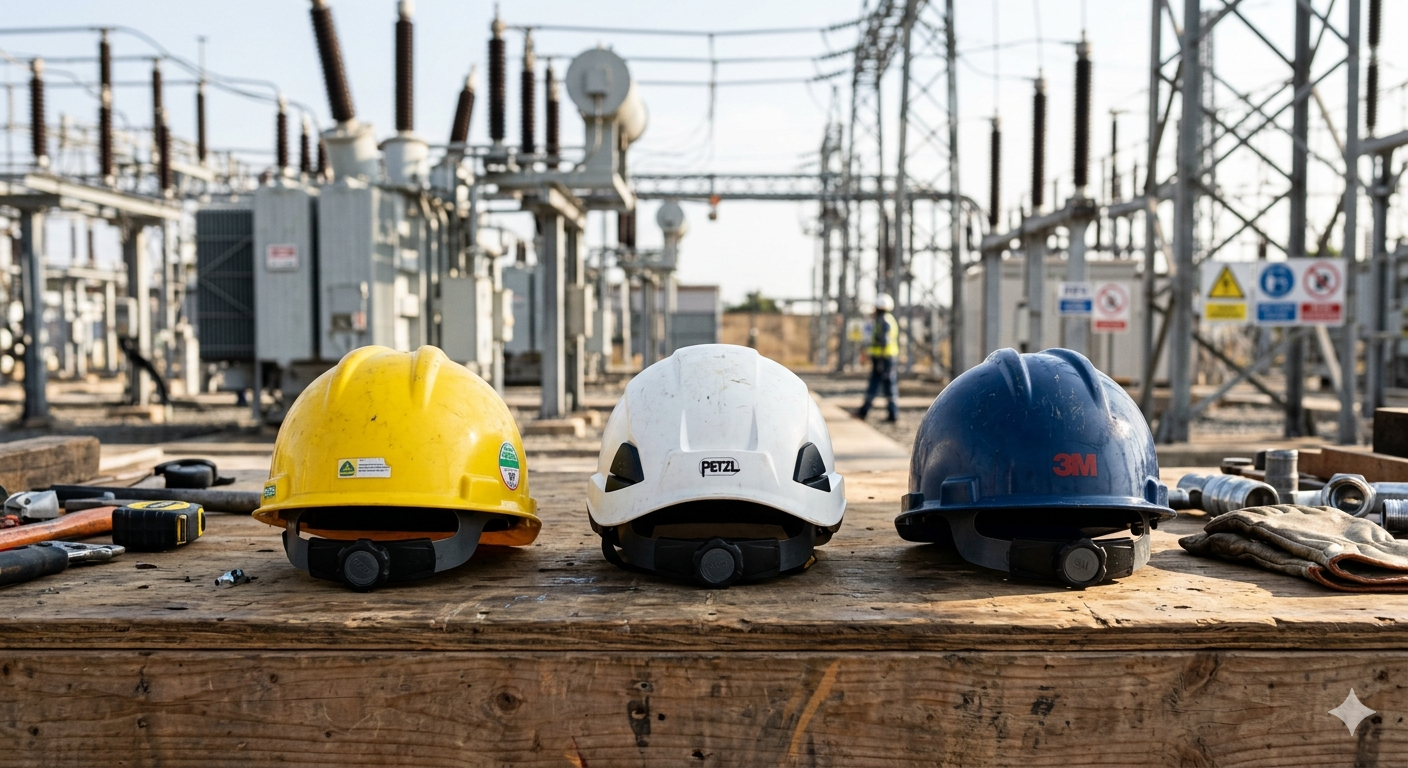
Choosing a hard hat class E G C rating is not a branding decision or a comfort decision. It is an electrical hazard decision. ANSI Z89.1-2014 defines three electrical classes for hard hats, and each one tells you exactly how much protection the shell offers near energized conductors. Pick the wrong class and a hat that looks identical to the right one can leave a worker exposed. This guide explains what Class E, Class G, and Class C mean, how to match them to your site, how to inspect for the protection you paid for, and why electrical class is specified separately from impact type.
What the hard hat class E G C ratings actually mean
Under ANSI Z89.1-2014, the electrical class describes how the shell performs when it contacts an energized source. There are three classes, and the letters are not a quality ranking. They describe different jobs.
Class E (Electrical) shells are tested to withstand contact with high-voltage conductors, to a proof-test value of 20,000 volts. Class G (General) shells are tested to a lower proof-test value of 2,200 volts. Class C (Conductive) shells offer no electrical protection at all and may even contain conductive materials such as aluminum.
Why Class C exists if it offers no electrical protection
Class C is built for ventilation, weight, or specialty features rather than electrical safety. On a site with zero electrical exposure, a Class C hat can be a legitimate choice. The critical rule is simple: never put a Class C hat anywhere a worker could contact a live conductor.
Matching the class to the work, not the worker
The right electrical class follows the hazard in the immediate work area, not the job title on the timesheet. A foreman and an apprentice working the same energized panel need the same class of protection.
For most utility, electrical, and line work where high-voltage contact is foreseeable, Class E is the specified choice. For general construction near standard building electrical systems, Class G is common. Class C is reserved for environments verified to be free of electrical hazards.
Walk the area before you specify
The most reliable way to land on the right class is a walk of the actual work zone. Note every place a worker, a tool, or a raised load could reach an energized conductor. If that contact is foreseeable at high voltage, specify Class E. If exposure is limited to general building systems, Class G is usually appropriate. Where you cannot rule out contact, default up, not down.
How electrical class interacts with impact type
Electrical class and impact type are two separate ratings on the same hat. A hat is rated Type I or Type II for impact and, independently, Class E, G, or C for electricity. You confirm both when you specify a hat. For a full breakdown of the impact side, see our guide on ANSI Type I vs Type II hard hats.
This separation matters when you order. A crew might need a Type I, Class E full-brim hat, while a different crew on the same project needs a Type II, Class G cap-style hat. Naming both ratings on the purchase order prevents a mismatch later.
Inspecting a hard hat to preserve its electrical class
An electrical rating only holds if the shell stays intact. Cracks, deep gouges, holes drilled for accessories, and chemical damage can all compromise the dielectric protection a Class E or Class G shell is supposed to provide. A hat that fails visually should be removed from electrical service regardless of how recently it was bought.
Build a simple pre-shift check into the routine: look over the shell for cracks and damage, confirm the suspension is intact, and verify the ANSI marking is still legible. Unauthorized modifications, including aftermarket holes or stickers placed over the shell, can affect the rating, so keep the shell as manufactured. Never store a Class E or Class G hat in a way that exposes it to prolonged heat or harsh chemicals.
Common mistakes when specifying a hard hat class E G C rating
The most frequent error is assuming color or style implies electrical protection. It does not. A bright, branded full-brim hat can be Class C; a plain cap-style hat can be Class E. Only the printed ANSI marking inside the shell tells you the class.
A second mistake is mixing classes within a crew that shares an electrical hazard. If part of the crew can contact energized conductors, the whole exposed group should carry the appropriate class. Color coding can help keep classes visually separated where you do run more than one; our guide on hard hat color codes covers a workable system.
Read the marking, keep the documentation
Every ANSI-rated hat carries its type and class molded or printed inside the shell. Train crews to check it, and keep the paperwork on file. Certification documentation is included in every shipment we send, so the class rating stays attached to your records for audits and procurement reviews.
Documenting electrical class in your safety program
Tie the class you select back to a written hazard assessment. A short note recording why a work area calls for Class E or Class G makes the decision easy to defend in an audit and easy to repeat on the next project. When you reorder, that record also keeps the specification consistent across crews and shifts.
Specifying electrical class on a custom order
When you order custom hard hats, the electrical class is locked in by the shell you select before any printing is applied. Jobsite-grade printing does not change the electrical class of a Class E or Class G shell, so you get the branding without compromising the rating. Browse the full-brim hard hat and cap-style hard hat options to see which classes each shell is available in.
Both Class E and Class G hats meet the ANSI standards referenced in OSHA regulations when matched correctly to the hazard. Note that OSHA does not certify or approve products; the responsibility is on the employer to select the correct ANSI class for the conditions. The standard is maintained by the International Safety Equipment Association, whose head protection standards overview is a reliable reference.
Getting the hard hat class E G C decision right is a matter of reading the hazard honestly: Class E for high-voltage contact risk, Class G for general electrical exposure, and Class C only where there is no electrical hazard at all. Confirm the class alongside the impact type, inspect the shell to keep the rating valid, and the rest of your custom order falls into place.
Branding your next crew rollout? Upload your logo and we’ll send pricing and a mockup within one business day.
GET A QUOTE