Hard Hat Suspension Systems: Ratchet vs Pin-Lock
The shell gets the attention, but the hard hat suspension is what actually keeps the helmet comfortable, secure, and protective all day. The suspension is the internal harness that cradles the head and absorbs impact, and the main choice is ratchet versus pin-lock. This guide compares hard hat suspension systems so your crew gets a fit they will actually keep on.
A helmet that fits poorly gets adjusted loose or worn wrong — which defeats the protection. The suspension is where comfort and safety meet.
Ratchet vs pin-lock
Ratchet suspensions adjust with a one-handed dial for fast, precise fit; pin-lock systems use notched bands that cost less but adjust slower and less precisely. The scores below compare the two.

For crews who put helmets on and off through the day or share hats across shifts, a ratchet’s quick adjustment pays for itself in comfort and compliance.
Suspension points and preference
More suspension points (6-point vs 4-point) spread impact and weight for better comfort on long days. Most custom orders favor ratchet systems, as the split below shows.

Fit, replacement, and branding
Suspensions wear out before shells do, so choose a system with easily replaceable harnesses. Whatever suspension you pick, the shell is your branding canvas — front and side logos keep crews identifiable on site.
| System | Best for | Note |
|---|---|---|
| Ratchet | Most crews | Fast, precise |
| Pin-lock | Tight budgets | Simple, cheap |
| 6-point | Long shifts | Comfort, airflow |
Ready to brand a batch for your company? See our companion guide, our Custom Hard Hats for Company Branding: Bulk Ordering Guide. Explore our custom hard hats or contact our team.
Why fit drives both comfort and protection
A hard hat protects by managing impact through its suspension, so a poor fit is a safety issue, not just a comfort one. A hat worn too loose shifts out of position or gets removed, and one worn too tight causes headaches that tempt workers to loosen it incorrectly. The suspension’s job is to cradle the head, maintain the critical gap between skull and shell, and absorb energy, and it can only do that when it fits properly — which is exactly why the ratchet-versus-pin-lock choice matters beyond convenience.
Fit also affects compliance in practice. A comfortable, easily adjusted hat is one workers keep on correctly through the whole shift, while a fussy one invites workarounds. Choosing a suspension that dials in a secure, comfortable fit quickly means the protection is actually in place when an impact happens, which is the entire point of the equipment.
Suspension points and impact distribution
Beyond the adjustment mechanism, the number of suspension points shapes comfort and protection. A four-point suspension is standard and effective, while a six-point suspension spreads impact energy and the hat’s weight across more contact area, reducing pressure spots and fatigue on long shifts. For crews wearing hats all day or in hot conditions, that broader distribution and improved airflow make a noticeable difference in comfort, which supports consistent, correct wear.
The suspension material and design matter too. A breathable brow pad and a well-shaped cradle keep the hat comfortable in heat and reduce the sweat and irritation that lead workers to adjust or remove it. Pairing enough suspension points with a comfortable cradle is what turns a compliant hat into one crews are glad to wear, and comfort is a quiet driver of safety.
Maintenance, replacement, and hygiene
Suspensions wear out before shells do, so a hard hat program should plan for suspension replacement. Sweat, sunlight, and daily handling degrade the harness over time, and a stretched or cracked suspension no longer holds the hat correctly. Choosing a system with an easily replaceable harness lets you refresh the fit without discarding the shell, extending the life of the hat and keeping the fit safe.
Hygiene is part of maintenance, especially for shared or seasonal hats. Wiping down the suspension and replacing sweat-worn brow pads keeps hats comfortable and sanitary, which matters when crews rotate equipment. Building a simple inspection and replacement cadence into your program ensures every hat fits and protects as intended, rather than quietly degrading until someone notices a problem.
Branding the shell without touching the suspension
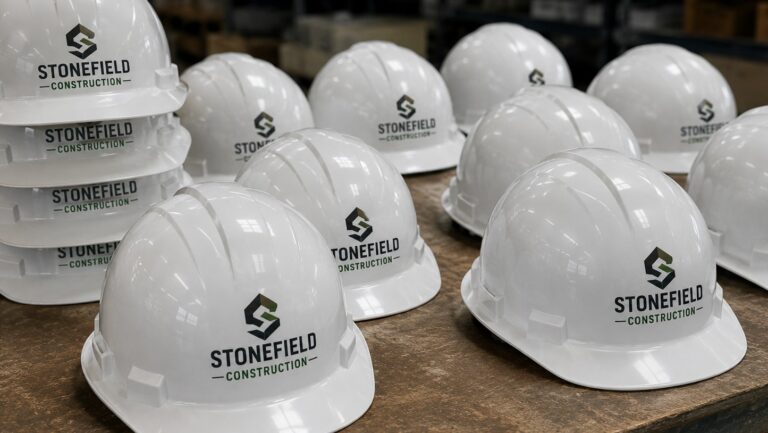
Choosing the suspension is about the hat’s interior, but the exterior shell is your branding canvas, and the two decisions work together. Because the suspension protects by managing impact, decoration should stay on the shell and never interfere with the harness or the crown’s impact zone. Front and side logos keep crews identifiable on site while leaving the internal suspension free to do its job, so you get a hat that is both well-fitted and on-brand.
Coordinating suspension type with a company-wide look also simplifies buying. Standardizing on a ratchet suspension and a consistent shell color and logo across all crews gives you a hat that fits comfortably and represents the brand uniformly from site to site. That consistency makes reorders straightforward and keeps every worker in the same recognizable, properly adjusted gear.
Comfort features and branding can reinforce each other. A six-point ratchet suspension for all-day comfort paired with a clean front logo produces a hat crews are glad to wear and that markets the company every time they do. Building the program around both a quality interior and durable exterior branding turns headgear into a safety product and an advertisement at once.
Common questions about hard hat suspension
Is ratchet or pin-lock suspension better?
Ratchet suspensions adjust with a one-handed dial for fast, precise fit and are best for crews who put hats on and off or share them, while pin-lock systems cost less and adjust more slowly. For most crews the ratchet’s convenience pays off in comfort and compliance.
What is the benefit of a six-point suspension?
A six-point suspension spreads impact energy and the hat’s weight across more contact area than a four-point, reducing pressure spots and fatigue on long shifts and improving airflow. It is a worthwhile upgrade for all-day or hot-weather wear.
How often should a hard hat suspension be replaced?
Suspensions wear out before shells do, so inspect regularly and replace a stretched, cracked, or heavily soiled harness. Choosing a hat with an easily replaceable suspension lets you refresh the fit without discarding the shell.
Does suspension choice affect safety?
Yes. The suspension maintains the critical gap between head and shell and absorbs impact, so a proper, comfortable fit ensures the protection is in place and worn correctly. A hat that fits poorly gets loosened or removed, defeating its purpose.
Can I brand a hard hat without affecting the suspension?
Yes. Decoration stays on the exterior shell, away from the suspension and the crown’s impact zone, so front and side logos keep crews identifiable while the internal harness does its job. Pairing a ratchet suspension with a clean front logo gives you a hat that fits well and stays on-brand.
Speccing hard hats for your crew?
We’ll match suspension type and branding to your site and shift patterns.
Get a Quote