Custom Hard Hat Printing: Methods, Placement & Durability
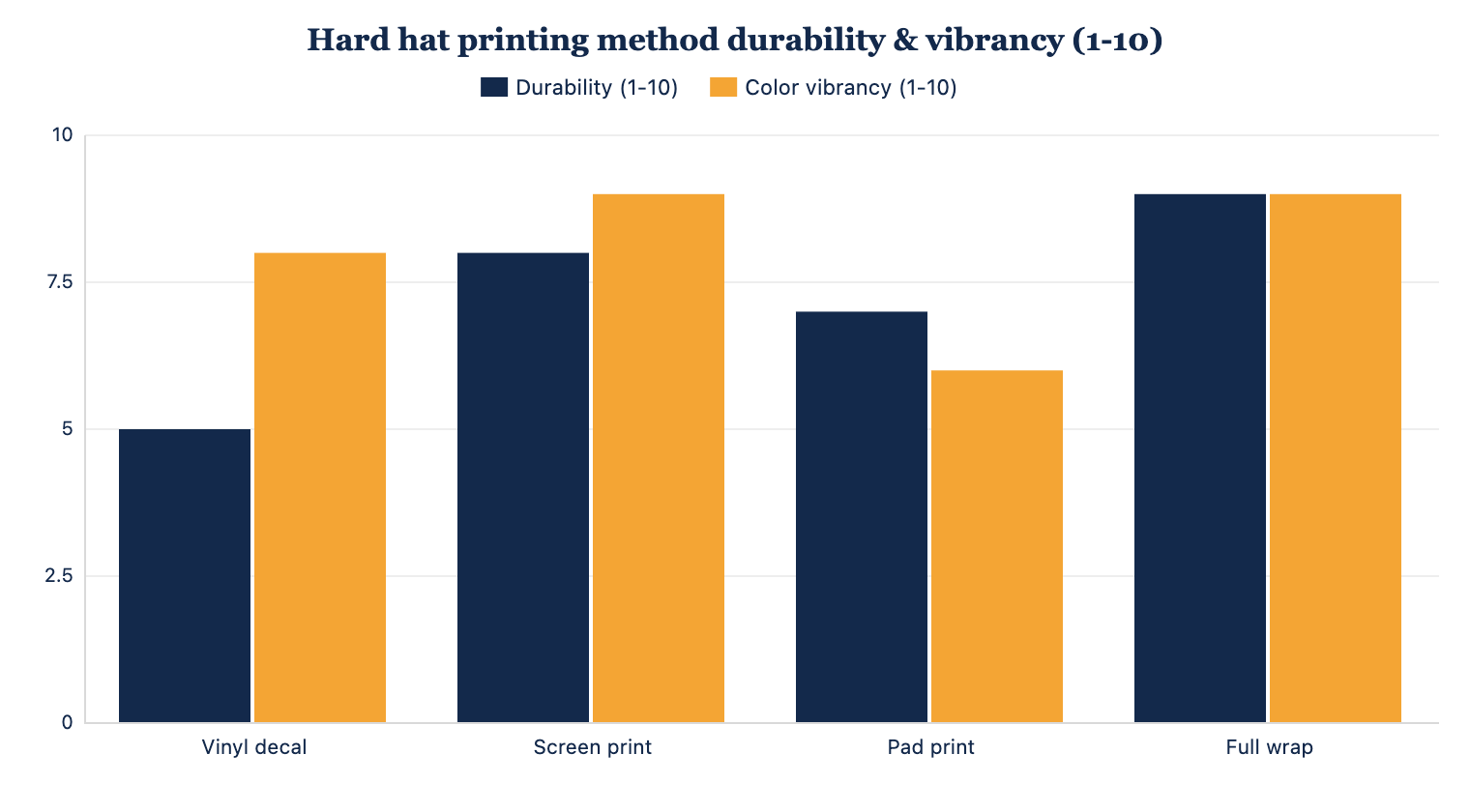
Every crew that orders branded hard hats eventually asks the same question: which custom hard hat printing method actually survives a full season on the jobsite? The honest answer is that it depends on your budget, your order quantity, and how much abrasion, sun, and grime the hat sees day to day. Vinyl decals, screen printing, pad printing, and full wraps all produce a clean logo on day one; the differences show up months later.
This guide breaks down the four common decoration methods, where crews typically place a logo for the best visibility, and what kind of durability and color vibrancy to expect from each option so you can match the technique to how hard your team actually works.
Vinyl decals
Vinyl decals are the fastest and least expensive way to put a logo on a hard hat, which makes them the default choice for small orders, temporary crews, or a one-off project hat. A cut or printed vinyl decal applies directly to the clean shell and can look sharp for the first few months. The trade-off is edge lifting: once dirt, sunscreen, or repeated glove contact gets under an edge, the decal starts to peel, and full sun exposure fades the color faster than the other methods. Decals also add almost no lead time, which matters if you need hats on site within days rather than weeks.
Screen printing
Screen printing lays ink directly into the texture of the shell rather than sitting a separate layer on top, so it resists edge-peeling in a way decals cannot. It holds color vibrancy well, particularly for solid logos with one or two colors, and is a common mid-volume choice for crews ordering fifty to a few hundred hats at once. Complex, multi-color artwork costs more to set up because each color needs its own screen, so simpler logos are the most economical fit. Once the screens are made, reorders in the same colorway are quick and consistent from batch to batch.
Pad printing
Pad printing works well on curved or textured surfaces, which makes it a practical option for smaller logo areas or hats with raised branding features molded into the shell. Durability sits in the middle of the pack; it holds up fine under normal handling but can show wear faster than screen printing or a full wrap on hats that see constant abrasion against ladders, scaffolding, or truck racks. It is often the right call for a small side panel mark rather than a large primary logo.
Full wraps
A full wrap uses a heavy-duty printed film that covers most or all of the shell, effectively becoming a new outer skin rather than a decoration on top of the original color. It is typically the most durable option against fading and scuffing because the printed layer is thicker and better bonded than a small decal, and it lets you print bold, edge-to-edge graphics instead of a single logo panel. The cost per hat runs higher, so full wraps are most common for company fleets that want a strong visual brand rather than a small crew ordering a handful of hats.
| Method | Typical cost tier | Best for |
|---|---|---|
| Vinyl decal | Lowest | Small orders, temporary crews |
| Screen print | Low-mid | Simple logos, mid-size orders |
| Pad print | Mid | Curved or textured logo areas |
| Full wrap | Highest | Company fleets, bold branding |
Where to place the logo
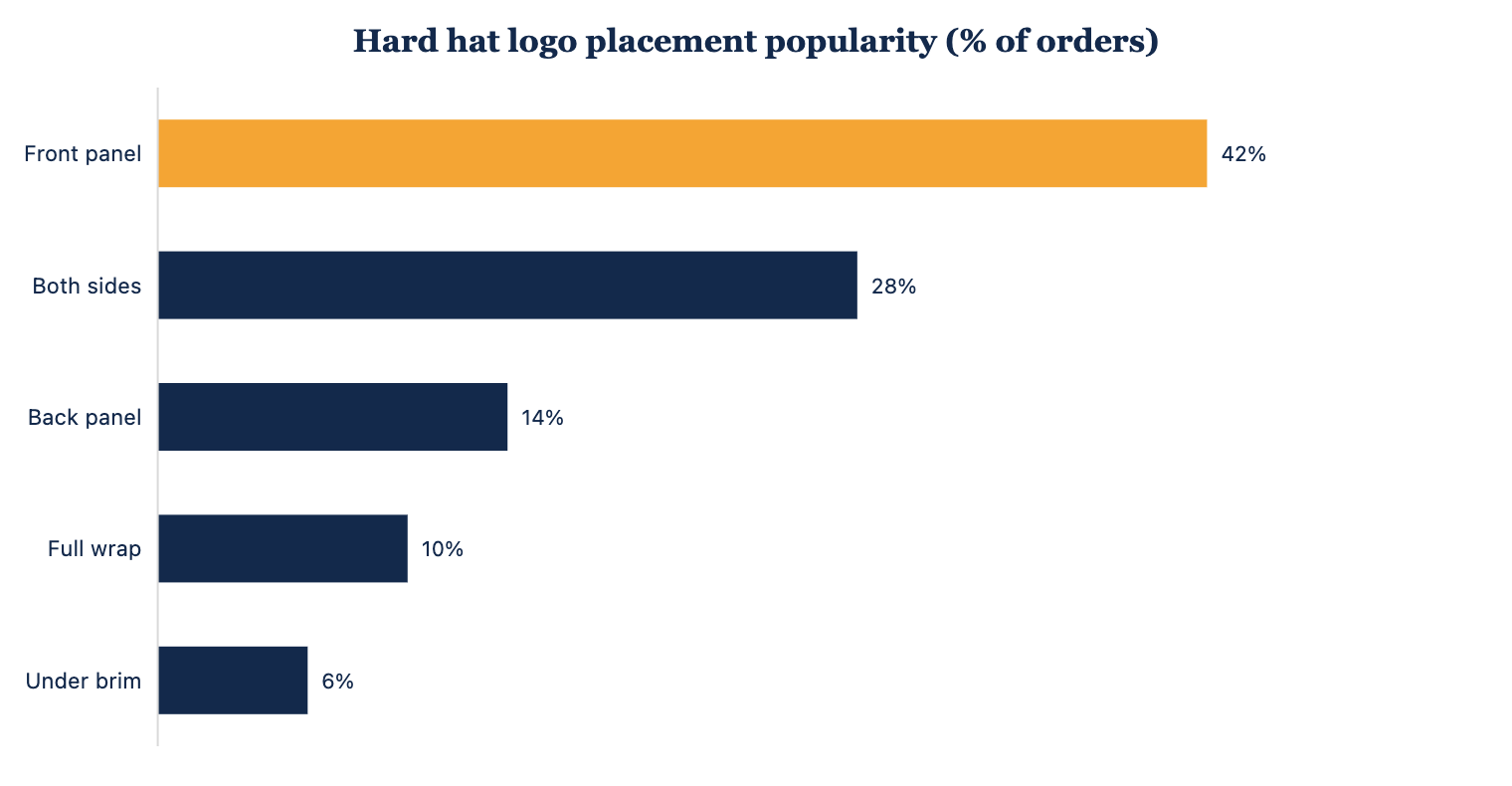
Placement affects both visibility and durability, since some panels see more contact and abrasion than others. The front panel is by far the most common spot because it is visible in photos, on site walk-throughs, and to anyone facing the wearer. Printing on both sides is the next most popular choice, useful for crew names or a smaller secondary mark, followed by back panels, full wraps, and under-brim placements for less visible details like a QR code or safety hotline.
Matching the method to your environment
Crews working outdoors in direct sun for most of the day should weight durability and UV resistance heavily, since that is where decals fade first and full wraps hold up best. Indoor manufacturing and warehouse crews, with less sun exposure but more contact with racking, ladders, and machinery, tend to do well with screen printing, which resists scuffing without the higher cost of a full wrap. Short-term project crews or subcontractors who only need hats for a few months are usually best served by decals, since the lower upfront cost outweighs the shorter lifespan. Mixed fleets that combine office visitors, full-time crew, and subcontractors sometimes use two methods at once: a durable screen print or wrap for permanent staff, and a quick decal for short-term badges.
Getting the artwork ready
Simple, high-contrast logos print more cleanly across every method than fine detail or gradient-heavy artwork, especially at the smaller panel sizes used on the sides of a hard hat. Send us your logo as vector artwork when possible, and let us know your shell shape and preferred placement so we can recommend the best method for your order size and budget rather than defaulting to the most expensive option. Thin script fonts and tight gradients tend to lose detail on a curved shell, so a bold, simplified version of your logo usually reproduces better than the exact file used on a business card or letterhead.
Ordering, reordering, and staying consistent
Keep a record of the exact method, color codes, and placement measurements used on your first order so a reorder six or twelve months later matches without a new round of proofing. This matters most for screen printing and full wraps, where slight shifts in ink mix or panel alignment are noticeable once two batches sit side by side on the same crew. Ordering a small buffer of extra hats up front is usually cheaper than a rushed small-batch reorder later, especially for full wraps, which typically have a higher minimum order quantity than decals or screen printing.
You can browse examples of finished crews on our homepage, and learn more about how we manage proofing and reorders on the about page before you commit to a method.
Bottom line
There is no single best method for custom hard hat printing across every crew; match the technique to your budget, order size, and how much abrasion and sun the hats will see, and the logo will still look sharp long after the first month on site.
Get a proof for your crew’s hard hats
Send your logo, shell style, and order quantity and we will recommend the best print method and placement for your budget.
Get a QuoteHome · About · Buying guides · Companion guide: full-brim vs. cap-style hard hats